Running a brick-and-mortar retail store means wearing a lot of hats. You're managing staff, serving customers, handling inventory, processing orders, and trying to grow the business — often all at once.
The retailers who do this sustainably aren't superhuman. They've just built better systems for the repetitive parts of the job, so their time and energy go toward the things that actually require their attention.
Here's where the biggest time savings tend to come from.
1. Automate the "What Needs to Be Done?" Question
A surprising amount of retail staff time gets spent figuring out what to do next, rather than doing it.
What needs restocking? What sold yesterday? Which products are running low? These questions get answered by checking reports, walking the floor, asking the manager, or digging through Shopify — and they get answered over and over again, every single day.
The fix is to build systems that answer these questions automatically. When your team walks in, the list is already there. They work the list. They move on.
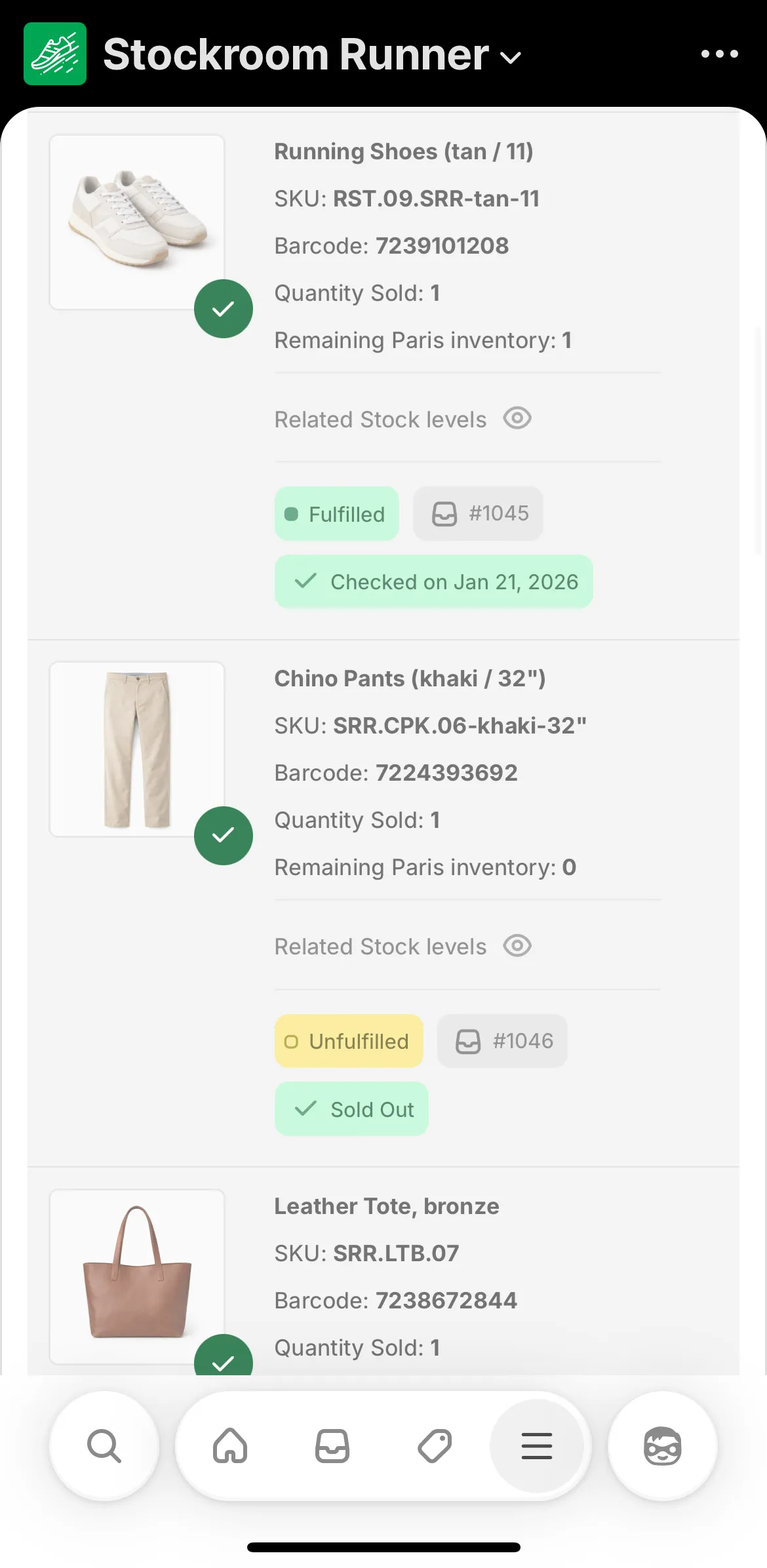
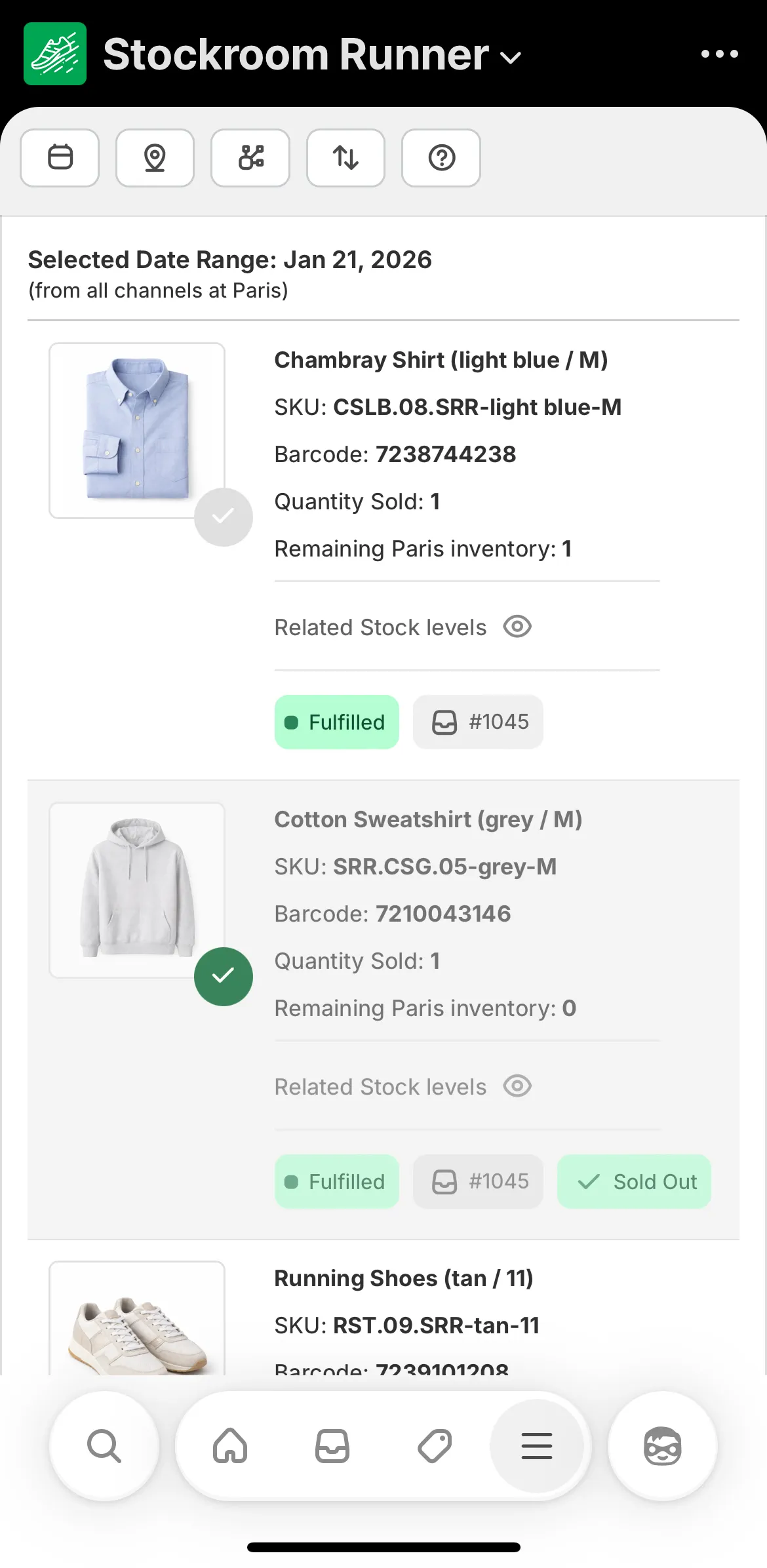
For restocking specifically, tools like Stockroom Runner pull this information directly from your Shopify sales data and present it as a simple visual checklist. No one has to generate a report or remember what sold. It's just there.
2. Make Handoffs Seamless
Shift changes are one of the biggest sources of dropped tasks in retail. Someone starts a job, their shift ends, and the next person has no way of knowing where things stand.
The solution is shared, real-time visibility. When restocking progress is tracked in a system everyone can see, handoffs become effortless. The incoming staff member opens the app and immediately knows what's been done and what still needs attention.
This sounds small, but across a week of multiple shifts and multiple staff members, it adds up to hours of recovered productivity — and a sales floor that's never left half-restocked between shifts.
3. Reduce the Time Spent on Inventory Decisions
A lot of retail time gets spent on decisions that could be made faster with better information. Should we reorder this product? Are we overstocked on that one? What's actually selling?
Shopify gives you the raw data, but turning it into useful decisions still takes time. Building habits around reviewing your sales data — daily or weekly, briefly and consistently — means you catch things early rather than reacting to problems.
Over time, you'll start to see patterns. Fast-moving products. Slow sellers. Seasonal shifts. That knowledge lets you make better purchasing decisions with less time and mental effort.
4. Stop Doing Things Manually That Can Be Automated
Every manual step in a workflow is a chance for things to go wrong and a drain on someone's time. Handwritten lists get lost. Spreadsheets go out of date. Information that lives in one person's head disappears when they're not there.
The goal isn't to eliminate the human element from retail — customers still need people, and always will. The goal is to remove the friction from the parts of the job that don't require human judgment.
Restocking is a good example. Deciding what to buy, how to display it, and how to talk to customers about it — that requires judgment. Figuring out which items sold today and walking them from the stockroom to the shelf — that's a process, and processes can be systematized.
5. Give Your Team Clear, Simple Tools
The best workflow in the world doesn't help if your team won't use it. Complexity is the enemy of adoption.
When you're evaluating tools or building systems for your store, ask: could a new staff member use this on their first day, without training? If the answer is no, it's probably too complicated for daily use.
The tools that stick are the ones that are obvious. A checklist is obvious. A photo of the product is obvious. A checkmark next to a completed task is obvious. That's the level of clarity your daily workflows should aim for.
Build a better restocking workflow today
Stockroom Runner gives your team a clear, automatic list of what sold and needs restocking — simple enough for any staff member to use from day one.
Try Stockroom Runner Free →The Compounding Effect of Better Systems
None of these changes are dramatic on their own. But together, and over time, they compound.
An hour saved on restocking every day is five hours a week. Five hours a week is over 200 hours a year — time that can go toward growing the business, serving customers better, or simply making the job more sustainable for you and your team.
The retailers who thrive long-term aren't the ones who work the hardest. They're the ones who build the best systems.